JE777 and Single-Deck Blackjack Guide
Generic Blackjack appears in the reported JE777 live-casino list, but availability of a specific title called Single Deck Blackjack is not established. This is therefore a general educational guide; check the current lobby and the relevant table rules before playing.
Dealer
Player

- First avoid exceeding 21
- Consider the dealer's upcard
- Read the table rules first
A general card-game illustration used to explain single-deck blackjack; it is not a verified screenshot of the JE777 interface.
How is single-deck blackjack played?
The aim is to make a stronger hand than the dealer without exceeding 21.
Choose a stake
Review the table minimum and maximum, blackjack payout and dealer rule before choosing a stake. Set a spending limit in advance.
Receive the first two cards
The player and dealer usually receive two cards each. At common tables one dealer card is face up, although the dealing format can vary by version.
Make a decision
Use your total and the dealer's upcard to choose Hit or Stand. If Double Down, Split or Surrender is offered, read its conditions first.
Compare the result
A hand normally wins by finishing above the dealer without exceeding 21. The payout for a natural blackjack can vary by table, so check the paytable before confirming a stake.
How to Use Basic Strategy
The correct decision depends on your hand, the dealer's upcard and the table's exact rules.
| Your hand | Dealer 2–6 | Dealer 7–8 | Dealer 9–10 | Dealer Ace |
|---|---|---|---|---|
| 8 or less | Hit | Hit | Hit | Hit |
| 9 | Double or Hit | Hit | Hit | Hit |
| 10 | Double or Hit | Double or Hit | Hit | Hit |
| 11 | Double or Hit | Double or Hit | Double or Hit | Hit |
| 12 | Stand or Hit | Hit | Hit | Hit |
| 13–16 | Stand or Hit | Hit | Hit | Hit |
| 17 or more | Stand or Hit | Stand or Hit | Stand or Hit | Stand or Hit |
| A-A or 8-8 | Split | Split | Split | Split |
Strategy Caution
This compact table is not a complete strategy chart. The correct decision changes with the dealer's Soft 17 rule, doubling restrictions, Double after Split and surrender availability; use a chart made for the table's exact rules.

- An Ace can count as 1 or 11
- Face cards count as 10
- Check Split and Double rules
A general illustration for card values and playing decisions; it does not depict a specific JE777 table.
Common Outcomes and Settlement
Verify ratios and conditions in the specific table's paytable.
| Outcome | Meaning | Typical settlement | What to verify |
|---|---|---|---|
| Natural blackjack | An Ace and a 10-value card as the first two cards | May receive a special payout | Check the exact ratio in the paytable |
| Regular win | A higher total than the dealer without exceeding 21 | Normally an even-money win | Check the table's settlement rule |
| Insurance | A possible side bet when the dealer shows an Ace | Settled separately | Does not change the main hand's result |
| Push or tie | Your total equals the dealer's total | Original stake normally returned | Check the rules for exceptions |
| Bust | The hand total exceeds 21 | Original stake loses | Check the total before another Hit |
Single-Deck vs Multi-Deck Blackjack
Deck count matters, but the table rules and payouts require equal attention.
| What to compare | Single deck | Multiple decks |
|---|---|---|
| Number of cards | Fewer cards before a shuffle | More cards before a shuffle |
| Tracking remaining cards | Relatively simpler | Relatively harder |
| Blackjack payout | Check the table rule | Check the table rule |
| Double Down | Check eligible hands | Check eligible hands |
| Dealer Soft 17 rule | May be Hit or Stand | May be Hit or Stand |
| Double after Split | Must be allowed by the rules | Must be allowed by the rules |

- Verify each table's payout
- Insurance is usually a separate wager
- Do not raise bets to chase losses
A general blackjack illustration used to discuss outcomes and risk; it does not show a confirmed payout or house edge.
Core Rules of Single-Deck Blackjack
Blackjack appears in the reported general live-casino list for JE777, but availability of the specific Single Deck Blackjack title is not established. This section therefore explains general rules; check a table's Help screen or paytable before playing.
Using one deck does not guarantee a player advantage. Outcome probabilities are also affected by the blackjack payout, whether the dealer Hits or Stands on Soft 17, Double and Split restrictions, and when the cards are shuffled.
Understand Card Values
Cards from 2 to 10 count at face value. J, Q and K count as 10. An Ace counts as 1 or 11, normally using the value that keeps the hand from exceeding 21.
When Should You Consider Double Down?
Double Down increases the original stake and normally gives you exactly one more card. The decision depends on your total, the dealer's upcard and the table's exact rules. Before using a strategy chart, confirm that it was built for those same rules.
Splitting Pairs
Splitting two equal-value cards creates two separate hands and requires an equal stake for the second hand. Rules for resplitting Aces, drawing to split Aces and doubling after a Split vary by table.
Should You Take Insurance?
When the dealer shows an Ace, Insurance may be offered as a separate side bet. It does not protect the main hand; it settles independently based on whether the dealer has blackjack. Check the paytable and deck rules before evaluating it.
Card Tracking and Shuffling
Although seen cards are relatively easier to track with one deck, an online table may shuffle frequently or after every round. Card tracking does not guarantee profit, and table rules or terms of use may restrict it.
How to Assess Outcome Risk
Remember
No strategy guarantees a win. Basic strategy only helps guide decisions for a specific table's rules; incorrect decisions can increase the long-term risk of loss.
Rules to Check Before Playing
- Blackjack payout ratio
- Whether the dealer hits or stands on soft 17
- Minimum and maximum betting limits
- Permitted double-down and splitting rules
- Shuffle method and number of decks used
Responsible-Play Tip
Set a budget and time limit before each session. Do not increase bets to recover losses; take a break and seek help when needed.
Understanding Single-Deck Blackjack Rules
Sources report generic Blackjack for JE777, but they do not establish that the specific Single Deck Blackjack title is available. Check the current lobby and table rules before playing.
The Single-Deck Format
Single-deck blackjack normally begins with one 52-card deck. How often it is shuffled and how many cards are dealt before a shuffle depend on the table rules.
House Edge Depends on the Rules
A single deck does not automatically mean a lower house edge. The blackjack payout, dealer's soft-17 rule, and double-down or splitting conditions collectively affect the mathematical advantage.
Checking Rules on Mobile
Before opening a table on mobile, check that its payouts, betting limits, and rules are clearly readable. Do not confirm a decision when important details are unclear on a small screen.
Shuffle and Outcome Information
For a software-based table, inspect the game information page for details about the RNG, shuffle method, and testing body. No evidence of independent certification was found for a specific JE777 single-deck table.
Payments Are Separate from Table Rules
bKash, Nagad, and Rocket are reported as JE777 payment methods. Their presence does not establish a blackjack table's payout, fairness, or withdrawal speed.
Support Channels
Sources report 24/7 live chat, WhatsApp, and Email support in Bengali and English. No specific response-time commitment was found; retain the time, device details, and round ID when reporting a problem.
- A single deck contains 52 cards
- Note when the deck is shuffled
- Set a spending limit in advance
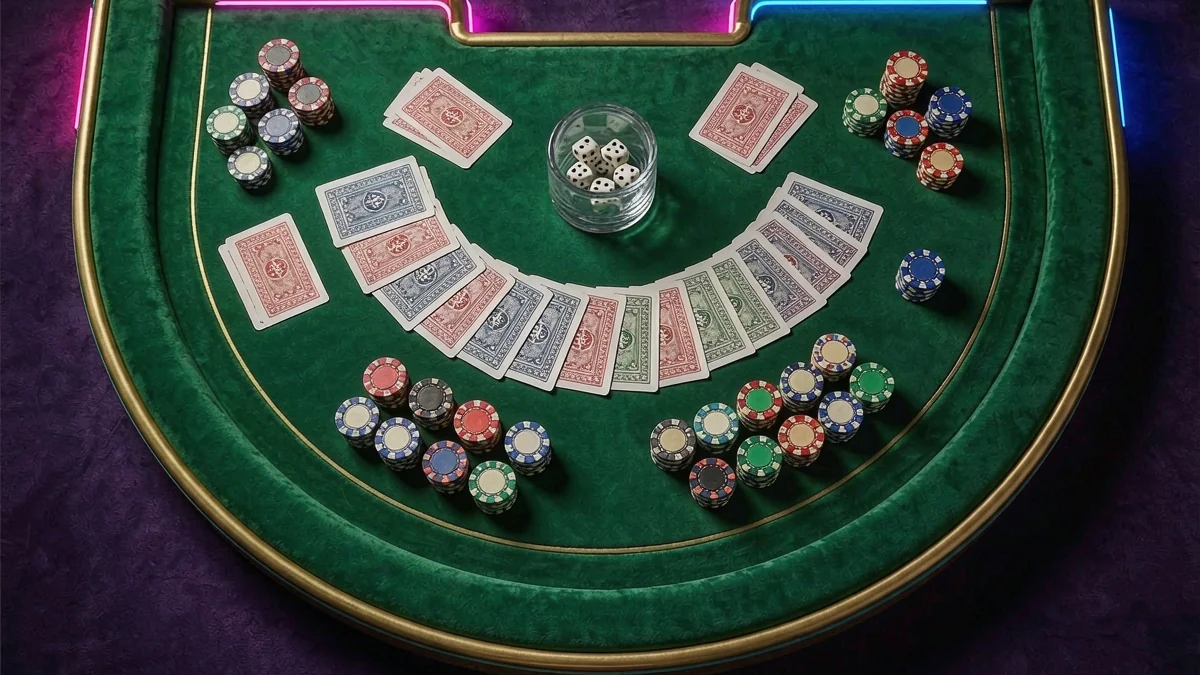
A general card illustration for comparing one-deck and multi-deck play; it is not evidence that a particular version is available on JE777.
Frequently Asked Questions
Concise answers about single-deck blackjack rules, risks, and table checks.
Single-Deck Blackjack Guide
Understand card values, table rules, and the risk attached to each decision. Strategy does not remove the possibility of loss; set a budget, avoid chasing losses, and take a break when needed.
Adults only | Play responsibly